Moved

This blog has moved to offthespork.com. Thanks!
Showing posts with label cooking: curry. Show all posts

Sunday, November 29, 2009

Cookbook Challenge: Week 2, Indian

Vindaloo


Recipe: Vindaloo
From Jamie Oliver's Ministry of Food

Bonus recipe: Roasted cauliflower with cumin, coriander and almonds
From Jame Oliver's Cook with Jamie


It's week two of the Cookbook Challenge, and this week's theme is Indian. I had a bit of trouble finding a recipe for this theme. I do own a couple of Indian cookbooks but I had cooked from those books before so told myself I wasn't going to look in them.

I looked through a few cookbooks before I picked up Ministry of Food by Jamie Oliver. In it was whole section on curries. Dilemma solved!

Out of the curries in the book, I choose the vindaloo recipe. I made the vindaloo paste the night before and marinated some lamb chops in it overnight.
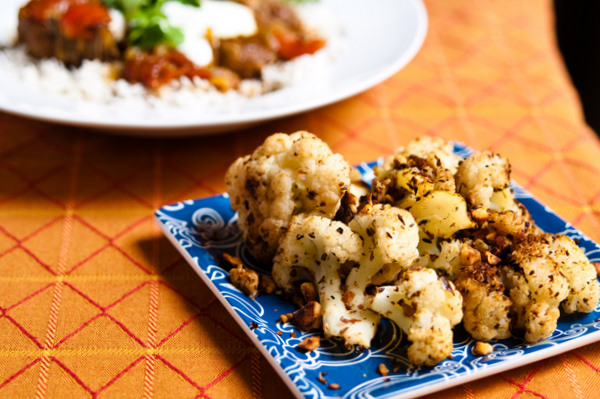
Roasted cauliflower with cumin, coriander and almonds


The next day I cooked the vindaloo and then made a bonus recipe to eat with the curry - roasted cauliflower with cumin, coriander and almonds. It's "Indian-ish in style" so I figured I may as well throw it in here!

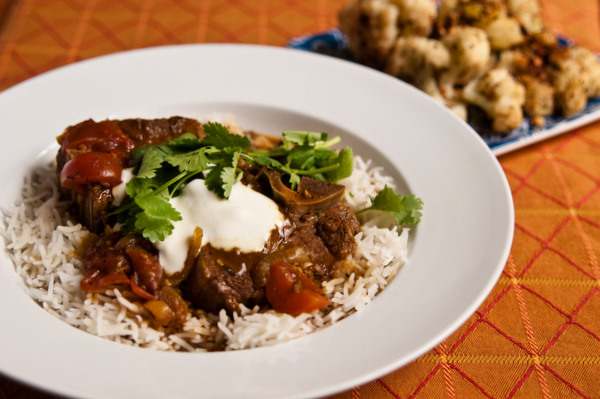
The vindaloo was fantastic! The sauce was slightly sour, sweetish, and full of flavour. It was wonderfully spicy, which Bro and I enjoyed, but poor Alastair struggled a bit! If you're a chilli-wimp, I'd recommend cutting back on the amount of chilli.

I think it's one of the best curries I've made - so I highly recommend giving this recipe a go. In fact, it was better than some of the curries we've eaten in restaurants (toot toot goes my horn).

The cauliflower was okay, it was rather spicy and sour. It wasn't a bad side dish, just eclipsed by the curry.

See previous Cookbook Challenge posts here.

Update: My Food Trail has a round up of posts for Week 2. See what others made!
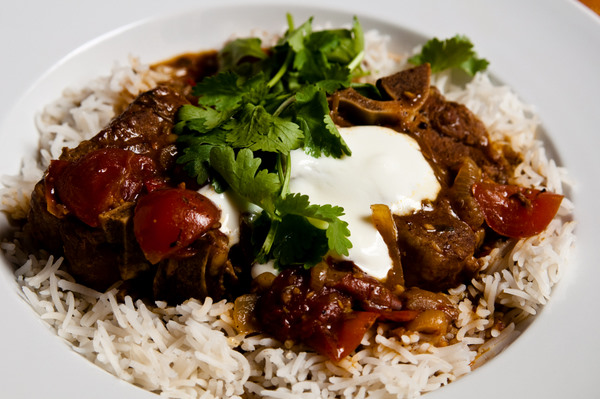
Vindaloo


Vindaloo

From Jamie Oliver's Ministry of Food

Serves 4-6

To make the paste:


2 cloves of garlic, peeled
a thumb sized piece of ginger, peeled and roughly chopped
4 dried red chillies
1 tablespoon turmeric
1/2 teaspoon sea slat
3 tablespoons groundnut oil (I used canola)
2 tablespoons tomato puree
2 fresh red chillies
a small bunch of fresh coriander

Spices for toasting:

1 teaspoon black peppercorns
4 cloves
2 teaspoons coriander seeds
2 teaspoons fennel seeds
1 teaspoon fenugreek seeds

Put a dry frying pan on medium to high heat and add the spices for toasting. Toast them lightly for a few minutes until golden brown. Remove the pan from the heat.

In a mortar and pestle, add the toasted spices and grind until fine.

Place the ground spices in a food processor with the rest of the ingredients and process until you have a smooth paste.

For the curry:

2 medium onions, peeled and finely sliced
4 cloves of garlic, peeled and finely sliced
1-2 fresh red chillies, finely sliced
a thumb sized piece of fresh ginger, peeled and finely sliced
a small bunch of fresh coriander, leaves picked and stalks finely chopped
4 ripe tomatoes, cut into quarters
vegetable oil
a knob of butter
800g diced pork shoulder (or other meat - I used lamb)
vindaloo curry paste as above
sea salt and freshly ground black pepper
6 tablespoons balsamic vinegar
1 tablespoon runny honey
Yoghurt, to serve

Place a large pot on medium heat and add a dash of oil and the butter. Add the onions, garlic, chilli, ginger and coriander stalks and cook for 10 minutes, until softened and golden.

Add the pork and the vindaloo curry paste. Stir well and season with salt and pepper.

Add the tomatoes, balsamic vinegar, honey and just enough water to cover everything. Stir to mix and bring to the boil. Turn the heat down to low, put the lid on, and let it simmer until the meat is tender.

When the meat is tender, taste and season with salt and pepper (mine didn't need any additional seasoning, so do check it first).

Serve on rice with yoghurt on top. Sprinkle with the coriander leaves.
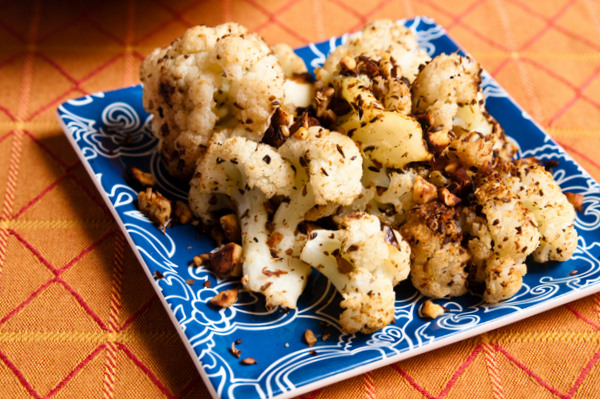
Roasted cauliflower with cumin, coriander and almonds


Roasted cauliflower with cumin, coriander and almonds

From Jamie Oliver's Cook with Jamie

Serves 4


1 head of cauliflower, outer green leaves removed, broken into florets
sea salt
olive oil
a knob of butter
2 teaspoons cumin seeds
2 teaspoon coriander seeds
1-2 dried red chillies
a handful of blanched almonds, smashed
zest and juice of a lemon

Preheat the oven to 200°C.

In salted boiling water, blanch the cauliflower for a couple of minutes. Drain in a colander, letting it steam dry.

When dry, toss it in some oil and the butter.

In a mortar and pestle, grind your spices and chillies with a pinch of salt. Mix with the almonds and put them in a hot, dry ovenproof pan.

Toast the spices and almonds for a couple of minutes. Add the cauliflower and cook for a couple more minutes.

Add the lemon zest and juice and mix well. Fry for another minute.

Pop the pan into the preheated oven for about 15 minutes to crisp up.


Thursday, February 21, 2008

Portuguese-style chicken curry, daal and cabbage slaw

I'm having difficulty with food blogging at the moment. It's not due to lack of time or energy. It isn't because I'm not eating well, or not cooking good food, or not photographing meals. My issue is with the whole stringing words into coherent sentences thing. It seems that food blogging involves more than just food, it also involves writing. I know! Who'd thought!

However, I am pushing through and making an effort!

The other week, I cooked a meal from a Indian cookbook I had received over Christmas. I made a chicken curry, a daal, and an interesting cabbage slaw that I'd never tried before.

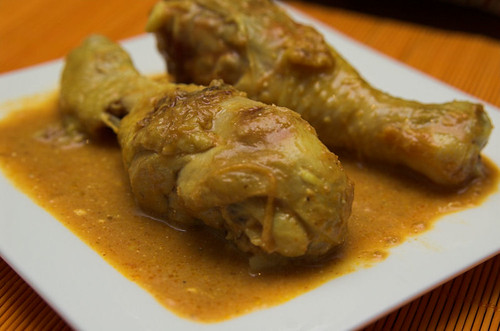
The Portuguese-style chicken curry (aka mungh vindaloo) wasn't as spicy as it usually is in restaurants, although I did try to up the heat factor. Originally, vindaloo wasn't particularly spicy and the cookbook tells me that vindaloo actually means "vinegary". Other sources (internets!) say that vindaloo is a derivative of the Portuguese "vinho de alho" which literally means wine (vinho) and garlic (alho). Vindaloo was bought to Goa by the Portuguese and was traditionally cooked with pork. I used chicken drumsticks in my version. They took ages to cook, but were very succulent.

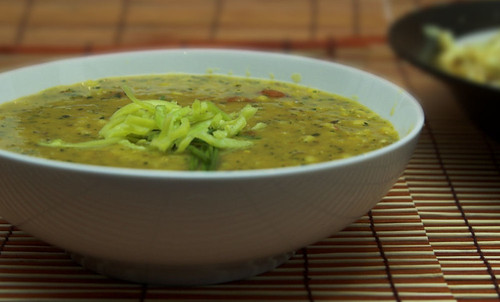
The daal was good, but a bit overshadowed by the vindaloo and the cabbage. My daal was quite soupy at first, but after standing for a while (I had to wait for the curry to finish cooking) it thickened up. I was rather heavy handed with the ginger!

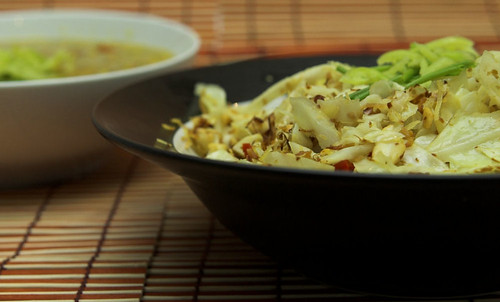
But on to the cabbage. The cabbage slaw was a real surprise! The coconut gave it a lovely fragrance, and the cabbage was sweet, slightly nutty and spicy. If you like coconut (and cabbage) give it a try. It was very different from how I normally cook cabbage and we really enjoyed it.

Gujarati Cabbage Slaw


Gujarati Cabbage Slaw

From Betty Crocker's Indian Home Cooking

Serves 6


1/4 cup peanut or vegetable oil
1/4 teaspoon asafetida (hing)
1 cup dry-roasted unsalted peanuts, coarsely chopped
1 medium head green cabbage (1 1/2 pounds), finely shredded (8 cups)
1 cup shredded fresh coconut or 1/2 cup dried unsweetened shredded coconut
1/4 cup finely chopped fresh coriander
3 fresh Thai, serrano or cayenne chillies, finely chopped
3 tablespoons sugar
1 teaspoon salt
1/2 teaspoon ground tumeric
Juice of 1 medium lime (2 tablespoons)

Heat oil in wok or pan over medium-high heat. Add asafetida and peanuts; sizzle 30 seconds.

Add remaining ingredients except lime juice, stir fry about 5 minutes or until cabbage is hot; remove from heat. Stir in lime juice.

Moong daal

Moong daal

From Betty Crocker's Indian Home Cooking

Serves 6


1 cup dried whole green lentils (sabud mung), sorted, rinsed and drained
4 cups water
1/4 teaspoon turmeric
1 tablespoon ghee or vegetable oil
1 teaspoon black or yellow mustard seed
1/4 teaspoon asafetida (hing) or garlic powder
1 tablespoon finely chopped ginger
1 medium tomato, finely chopped (3/4 cup)
2 fresh Thai, serrano or cayenne chillies, cut lengthwise in half
1 teaspoon salt

Place lentils, water and turmeric in a saucepan. Heat to boiling; reduce heat. Partially cover and simmer 30 to 35 minutes or until lentils are tender.

While lentils are simmering, heat ghee/oil and mustard seed in a a pan over medium-high heat. Once seed begins to pop, cover skillet and wait until popping stops.

Add asafetida and ginger to mustard seed; stir fry about 30 seconds or until ginger is partially brown. Add tomato and chillies, stir fry 3-5 minutes or until tomato is softened.

Stir tomato mixture and salt into lentils. Partially cover and simmer for 10 minutes.


Portuguese-style chicken curry

Portuguese-style chicken curry / Mungh vindaloo


From Betty Crocker's Indian Home Cooking

Serves 4


2 tablespoons vegetable oil
2 medium onions, coarsely chopped
1 tablespoon coarsely chopped ginger
5 medium cloves garlic, coarsely chopped
3/4 cup tomato sauce (I think this is tomato puree, I used a can of whole tomatoes)
1 tablespoon coriander seed, ground
1 teaspoon cumin seed, ground
1/2 teaspoon salt
1/2 teaspoon cayenne pepper
1/4 teaspoon ground turmeric
1 pound boneless, skinless chicken breast, cut crosswise into 1/2 inch strips (I used drumsticks instead)
1/4 cup white vinegar
1/2 cup coconut milk
1/4 cup plain yoghurt

Heat in a pan over medium-high heat. Add onions, ginger and garlic; stir fry about 5 minutes or until onions and garlic are golden brown.

Stir in tomato sauce, ground coriander, ground cumin, salt, cayenne pepper and turmeric, reduce heat. Partially cover and simmer around 5 minutes or until a thin film of oil starts to form on surface of sauce. Remove from heat; cool 3 to 4 minutes.

Place sauce in blender (or use a stick blender). Cover and blend on medium speed until smooth. Return sauce to saucepan.

Stir chicken into sauce. Simmer uncovered 3 to 5 minutes, stirring occasionally, until chicken is partially cooked.

Stir in vinegar and coconut milk. Simmer uncovered 5 to 7 minutes, stirring occasionally, until chicken is no longer pink in centre.

Beat yoghurt with wire whisk until smooth; stir into chicken mixture. Cook uncovered for 1 minute, stirring occasionally, just until yoghurt is warm. Serve with rice.


Sunday, September 23, 2007

Chicken and potato curry with roti

I don't normally like using curry pastes that come from a jar. They're very convenient, but I find the taste a bit odd. One problem is that it never tastes the way I think it should (ie good!) but the worst part is that there always seems to be either a sour or chemical taste to them. I've tried a few different brands and they all seemed odd.

I'm never buying Indian curry paste again. I've successfully tried a few recipes for Indian curries that were delicious. They were time consuming and contained a gazillion spices, but the depth of flavour was infinitely better than jar curry. I'd rather cook curry on a special occasion than put up with ick curry.

But I've never had any success with cooking Thai curries. Even from scratch, my curry pastes are insipid, one dimensional and uninspiring. Such a disappointment. I should keep trying.

As for Malaysian curry – I've never tried making it. The "outside kitchen" (ie when Alastair "cooks" and goes out to buys food) does such good laksa and nasi lemak, that I've never bothered trying. But the other week I had roti in my fridge, and no time to cook a proper curry. I decided to use a jar of laksa paste in the pantry that I bought a while ago (Por Kwan brand, bought from an Asian supermarket). I added in a few things and it actually tasted really good! Have I been wrong about jar curry paste?

Chicken curry with roti


Chicken and potato curry

2 onions, sliced
The white part of a stalk of lemongrass
Half a jar of laksa paste
3 medium potatoes, peeled and cut into large chunks
400gram can of coconut milk
200ml water
6 chicken drumsticks
1 teaspoon fish sauce

Cook the sliced onions on low heat until soft (about 15 mins). Crush the stalk of lemongrass with your knife and throw that into the pot.

Add half the jar of laksa paste and the potatoes. Stir to combine and cook until fragrant.

Add the coconut milk and water, then the drumsticks. Bring to the boil and then simmer until the chicken is cooked and tender (about 30 minutes).

Stir in a teaspoon of fish sauce and serve with flakey roti. (If serving with rice, you may want to thicken the sauce).


Related Posts with Thumbnails