Moved

This blog has moved to offthespork.com. Thanks!
Showing posts with label travel: japan. Show all posts

Thursday, June 3, 2010

Japan: assorted snacks and sweets, mostly mochi

Here are some random snacks and sweets from our trip to Japan last year.

I'll start with the mochi and mochi type items - because I loved the mochi in Japan. It was all so fresh and delicious!
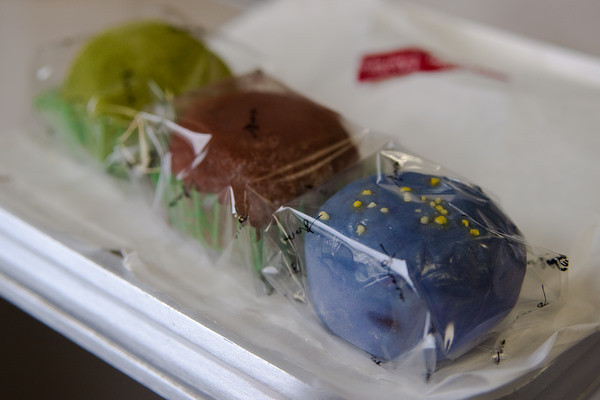
Best daifuku ever


I’ll start with some of the best. When we were in Takayama, there was a sweets shop down the road from our ryokan. I wish I had taken a photo of the shop now - they had glass fronted cabinets lined with what must have been rows of 20 different flavours of individually wrapped daifuku (mochi with a filling). It. Was. Wonderful. The daifuku from there was the best I have ever eaten! The mochi had the usual characteristic chewiness, but it was really fresh and soft, and seemed to melt in the mouth.

Just before we left Takayama for our next stop, I purchased three flavours to eat on the train – green tea, chocolate and the purple one was a purple Japanese fruit that we had seen at the markets, which I believe is called akebi. My favourite was the green tea with chestnut filling. The sweetness of the chestnut filling was perfect against the bitterness of the green tea. Sigh. I still remember that daifuku very fondly and wish we could get ones as good here in Australia.
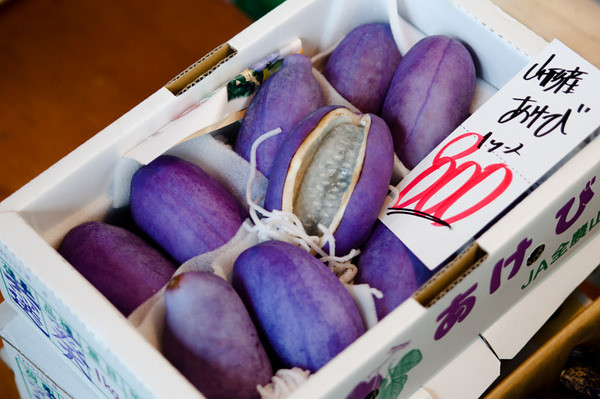
Purple fruit


This is the purple fruit that I think is called akebi. We never tried the actual fruit, but the daifuku didn't really have a distinctive taste. It wasn't memorable at all, and all I can recall of it is the red bean filling.
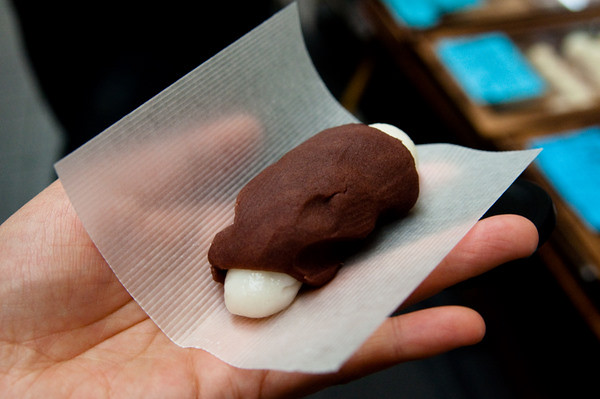
Mochi


We came across these in a market in Osaka - they are like an inverted daifuku with the red bean paste wrapped around plain mochi.
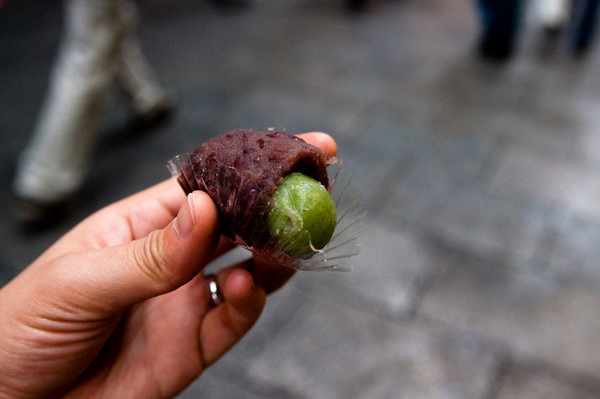
MOCHI


In this version, the green colour of the mochi wasn't green tea, as I assumed. I'm pretty sure that I was told it's due to mugwort, a herb that grows wild in Japan. It gives the mochi an earthy taste. I preferred the plain version, although this one was interesting to try.
Warabimochi


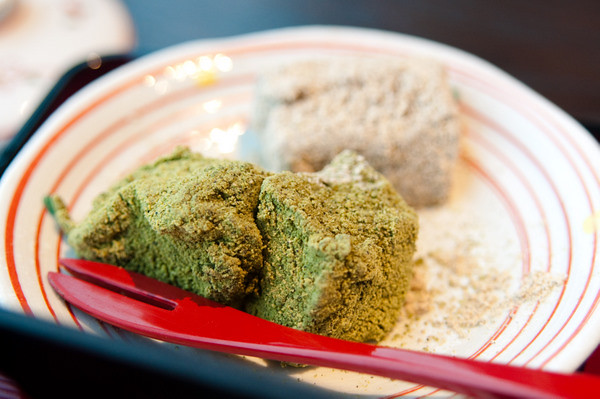
This sweet was part of a lunch set we ate on the top floor of a department store in Kyoto. I believe this is called warabimochi, and it’s not a proper mochi. Mochi is made from pounded glutinous rice, while warabimochi is made from bracken starch. It has a chewy, jelly like texture. We had a couple of pieces with green tea powder and some with kinako (toasted soy bean flour). It may not have been proper mochi but I loved it. It wasn't too sweet, and I really enjoyed the texture.
Warabimochi


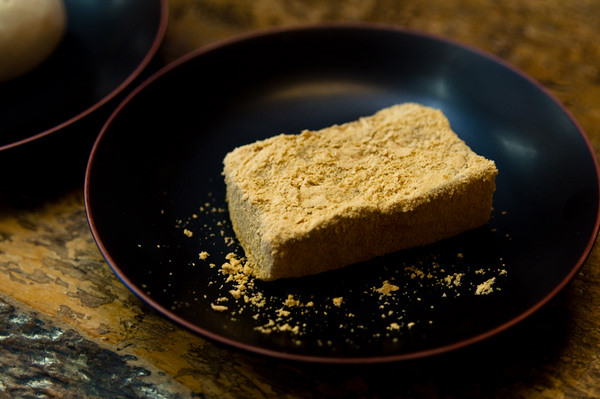
When we were in Koyasan, we rather quickly ran out of sights to see and things to do. We ended up killing time by hanging out in a sweets shop, eating sweets and drinking tea. We tried three varieties - this one was a warabimochi with kinako covering.
Sweet


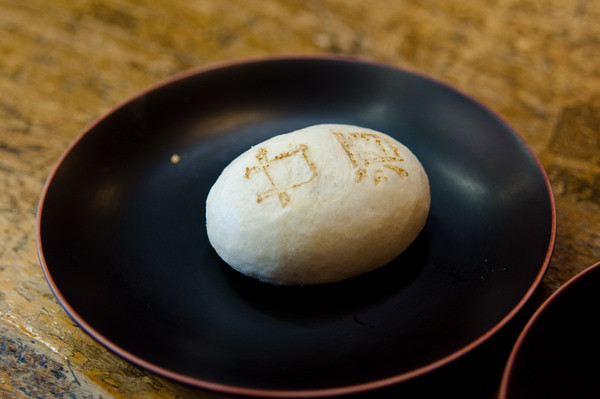
I think these ones were a type of manju (fukashi manju?), a steamed rice cake with a red bean filling.

Sweet


This was the third item from the sweets shop, and I will have to be honest and tell you I have no idea what it's called! It's on top of a paper bag because I bought it for the train ride to Osaka and it got a bit flattened in transit.
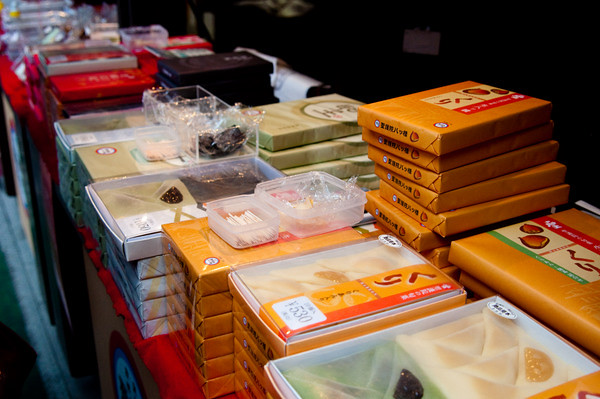
Nama Yatsuhashi


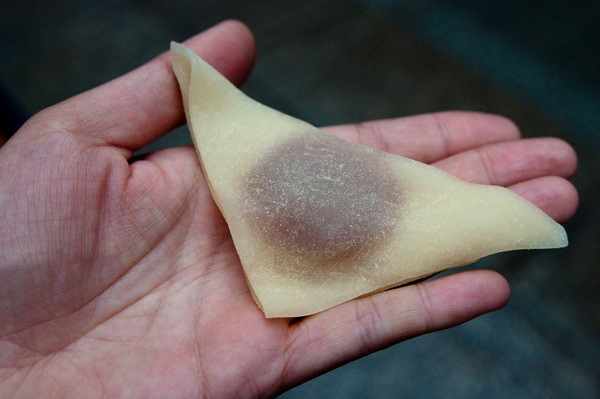
These triangle shaped sweets are big in Kyoto and are called nama yatsuhashi. The soft, mochi-like skin is made from rice flour, flavoured with cinnamon, and comes with different fillings inside, such as red bean, black sesame, or fruit flavours. The skin can also come in a variety of different flavours. These were some of my favourite Japanese sweets – I loved the faint cinnamon flavour, and of course, the soft chewy skins. I did try a fruit version (strawberry) but I preferred the ones that were green tea, black sesame or red bean.

They were almost as good as the daifuku from Takayama.
Nama Yatsuhashi


Here you can see all different varieties boxed up for sale. They can also be baked into cookies called yatsuhashi, but we didn’t try the baked versions.

By the way, I have read that a piece of mochi that is around match-box sized has the same amount of calories as a bowl of rice. Gulp! Perhaps if I had known that I wouldn’t have stuffed my gob with so much mochi.... Nah, who am I kidding! It wouldn’t have stopped me!
Buying a sweet


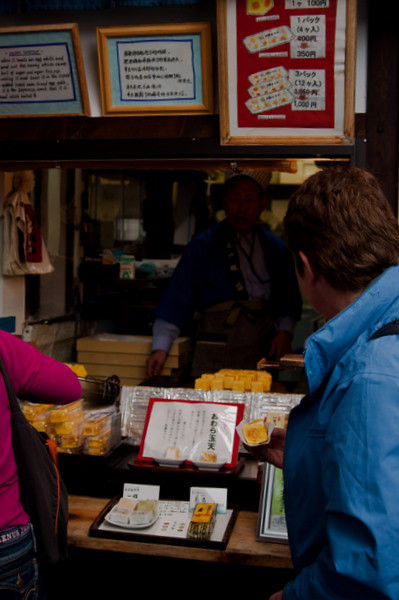
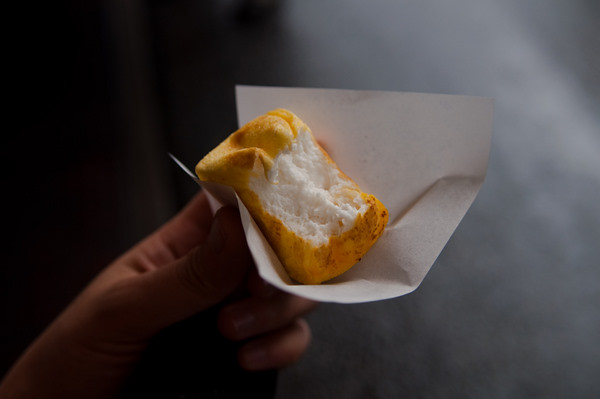
Now moving away from the mochi, and back to Takayama. This stall at the morning market sold sweets that were like cubes of marshmallow, covered in egg and honey and then grilled.
Sweet


The cubes were super sweet, soft and eggy. So so sweet! I had a hard time eating a whole one.
Kit kat


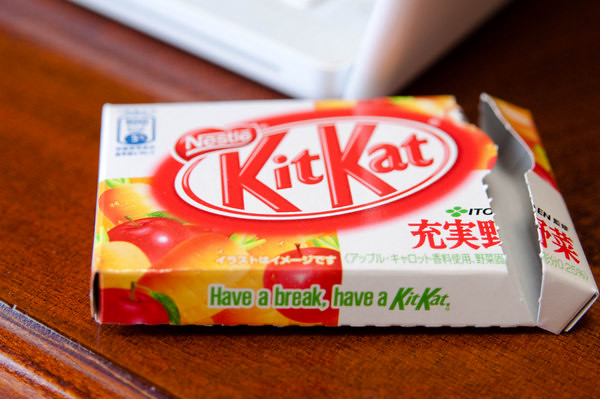
Everyone knows that Japan is the land of crazy Kit Kat flavours - we came across an apple and carrot version. Sadly, it was horrible and tasted rather like bodywash!
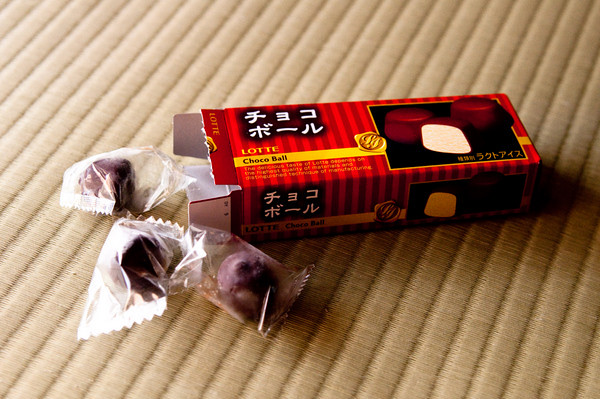
Chocolate covered ice cream balls


Alastair bought this box of chocolate covered ice cream balls from a vending machine. When he opened it up, we found that each ball was individually wrapped!
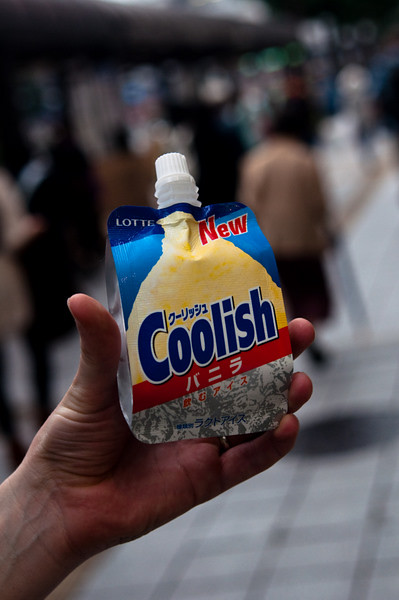
Coolish


This is vanilla ice cream in a squeezy pack – called Coolish – and yes, we did buy it because of the name! How could we have passed it up? Alastair only ate half before it was stolen off him! Okay, not really stolen - a teenage boy with Down’s Syndrome came up to him, said hello, and grabbed the Coolish. Alastair let him have it, although he said wistfully later, “I was really enjoying that ice cream.” Awww!
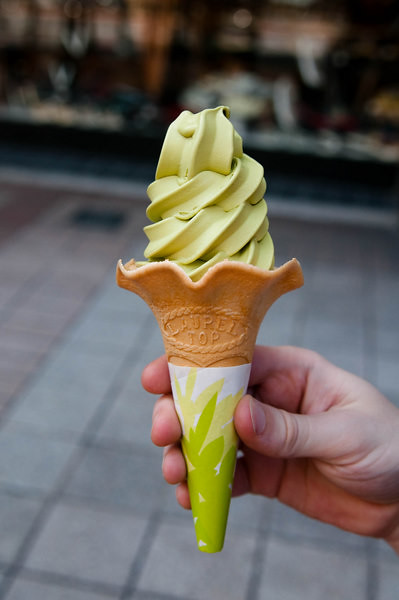
Green tea ice cream


This was a green tea ice cream we ate in Tokyo and the reason it's up here? LOOK AT THE CONE! It catches any ice cream drips! Isn’t that just genius?

Mitsuya cider


And now on to drinks – Mitsuya Cider was one of our favourites. There are other flavours, but the basic flavour sort of resembles Sprite, although not quite as sweet. There are also Mitsuya Cider hard candies, which fizz in the mouth as they dissolve. I loved the candies and made sure we purchased several bags to bring home.
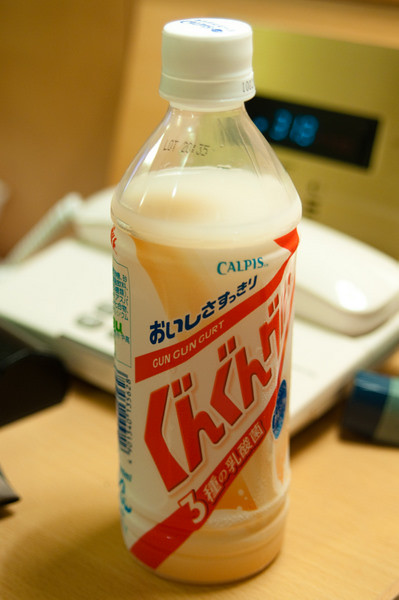
Calpis


We are big fans of Calpis. Big fans. I love all those fermented milk type drinks. This flavour is a "more nutritious" yoghurt version, and was fantastic.
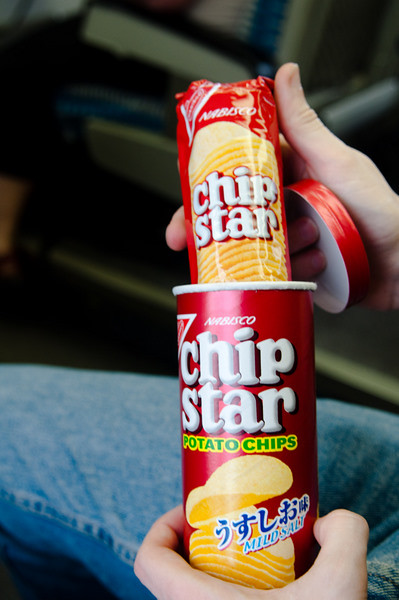
Chips!


If you're still with me - yay you! Only a few more snacks to go. I had to take a photo of these potato chips because I was rather amused that the chips were encased in a bag inside the tube.
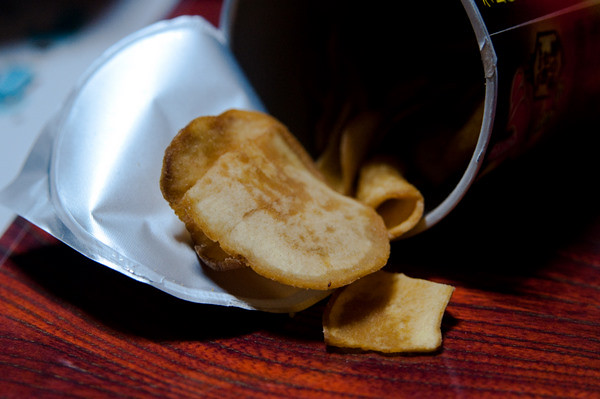
Sweet potato chips


Not being able to read Japanese, I purchased these chips expecting them to be salty. I was rather surprised when I ate one and discovered that they were sweet potato and therefore, sweet! After I got over my initial surprise, I quite liked them.
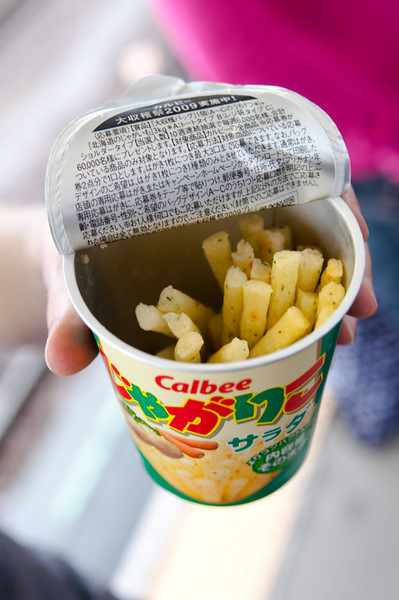
Snack


And how about some crunchy sticks of unhealthy, fried, processed carbs? Yes please!
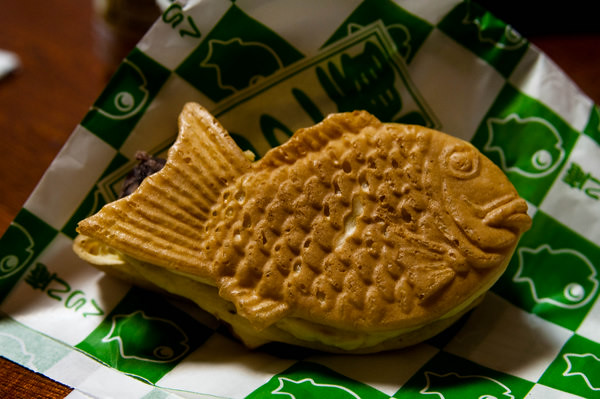
Taiyaki


And to finish off, here’s a photo of taiyaki, a Japanese fish shaped cake. We ate these in Tokyo, where there were numerous little shops selling freshly cooked ones. The outside is like a pancake/waffle, and inside the most common filling is red bean, although we also tried custard.

We ate many, many more snacks in Japan, but fortunately I didn't take photos of everything otherwise we would be here all night. If you want more Japan eats, previous Japan posts can be found here.


Saturday, February 27, 2010

Japan: Kyoto - cooking class

After a bit of a break, I'm back with another Japan post! Bear with me, I only have a couple left to write.

While in Kyoto, we did a cooking class where we made rolled sushi, miso soup, and spinach salad with a roasted sesame dressing. And then we ate it for lunch!

Kyoto cooking class


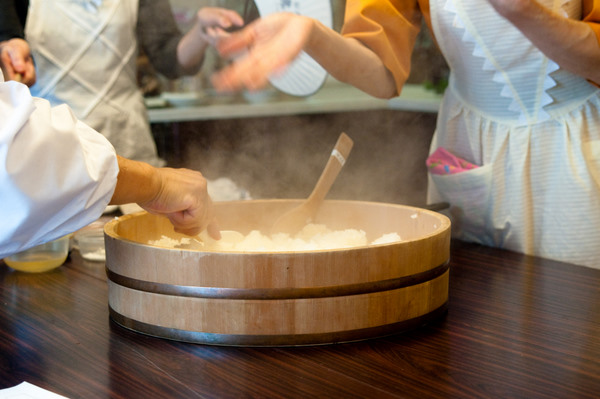
For the sushi, rice had been cooked before we arrived (otherwise it would have taken ages) and once we all sat down, the rice was tipped out into a wooden bowl. A mixture of rice vinegar, water, sugar and salt was poured in and "cut" through the rice in a folding motion (to prevent breaking the grains). The rice was then fanned to quickly cool it.

The rice was left to finish cooling, and next we made dashi. Dashi is a Japanese soup stock, and is a fundamental ingredient for many Japanese recipes, including miso soup. We made one of the most common versions, using dried kelp (kombu) and dried bonito flakes. The kombu is wiped with a damp cloth, and then soaked in a pot with water for at least thirty minutes. After the soaking time, the pot is put on the heat and just before the water boils the kombu is removed. When the water boils, a big handful of bonito flakes was added and the heat turned off. After all the flakes had sunk to the bottom, the liquid was strained and was ready to use.

Kyoto cooking class


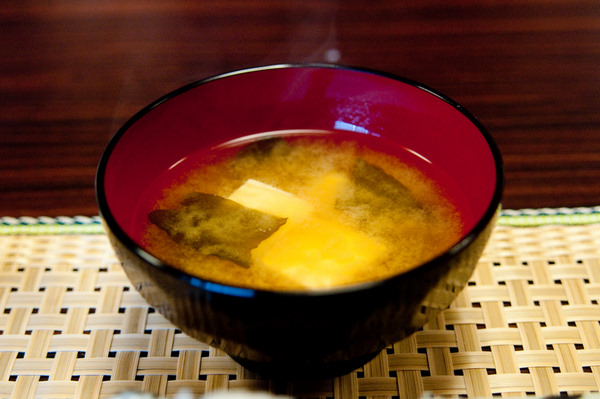
The dashi was used to make miso soup. We were given three types of miso to taste - white, yellow and brown. It was interesting to taste the difference in flavour between the three misos. The darker the miso, the more salty it was. The white had a touch of sweetness to it, and the yellow was less salty than the brown. I think we used the brown to make our miso soup, which also had seaweed and diced tofu. Yum.

Kyoto cooking class


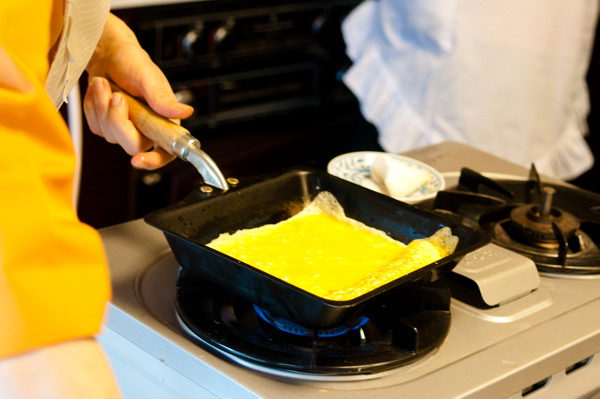
After the miso soup, we moved on to rolled egg omelette (tamago) for our sushi rolls. This was cool! I had always wondered how the egg was rolled up so nicely. To make the tamago, several eggs were beaten lightly with a bit of dashi, soy sauce, mirin, salt and sugar. To produce the rolled layers, a small amount of egg was added to a well oiled rectangular pan - just enough to cover the bottom. The pan was tilted to cover the bottom evenly with egg.

Kyoto cooking class


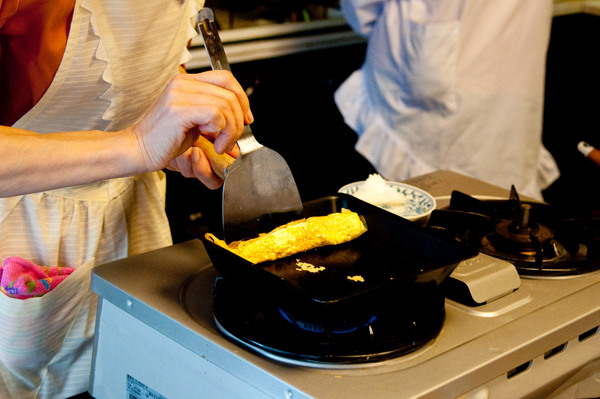
When the egg was nearly set, the egg was rolled up towards the front of the pan using a spatula.

Kyoto cooking class


The rolled up egg was then pushed to the back of the pan, and the empty part of the pan was re-oiled. Then another layer of egg was poured in. The rolled omelette was lifted up with chopsticks and the pan was tilted to allow the uncooked egg to flow underneath it.

Kyoto cooking class


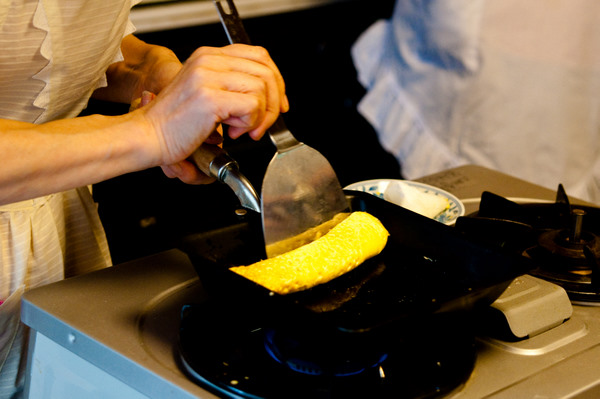
When the uncooked egg was nearly set, the omelette was rolled towards the front again. The remaining egg mixture was cooked in the same manner, with the rolling process repeated to create a single roll with many layers. I had a turn at rolling the omelette, and it was much easier than it sounds in this somewhat convoluted explanation!

Kyoto cooking class


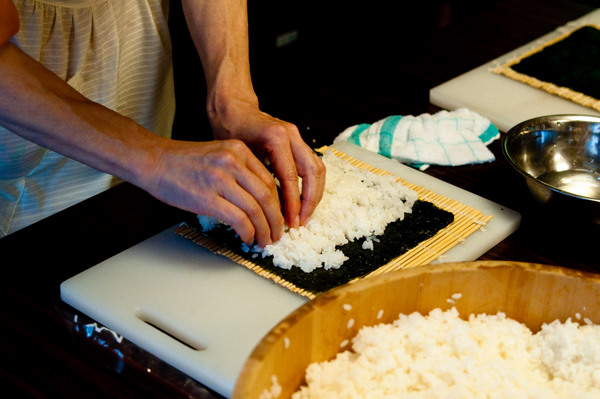
Next, it was time to assemble the sushi rolls. A layer of the prepared sushi rice was spread on to a sheet of nori (dried seaweed) on top of a bamboo mat, leaving a strip clear of rice.

Kyoto cooking class


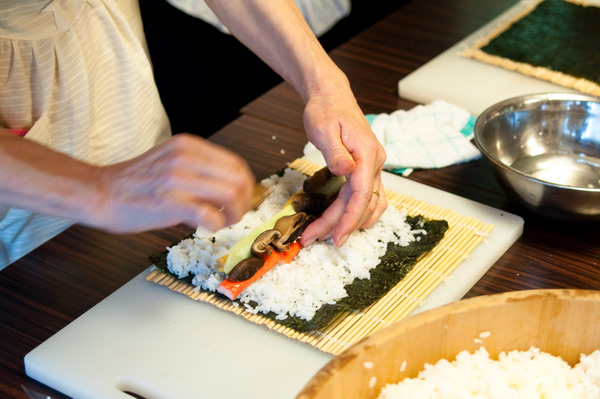
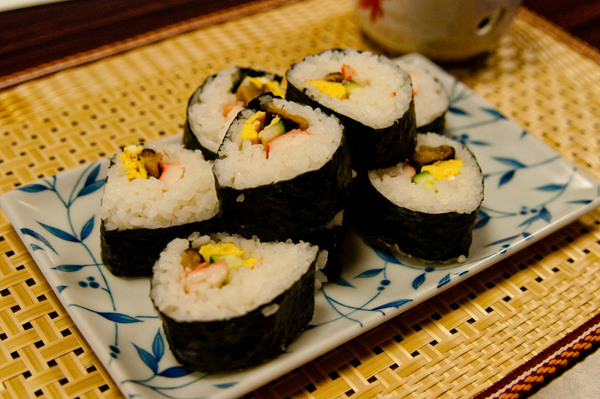
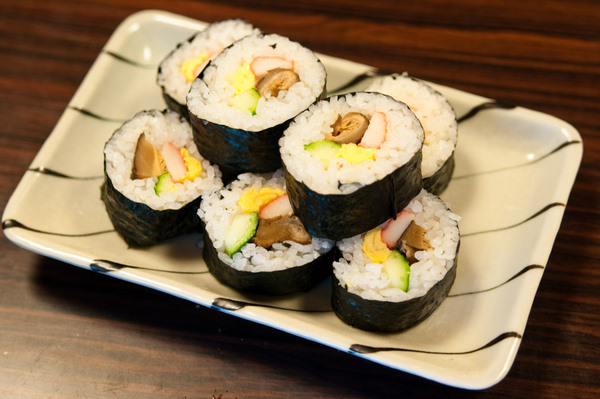
Fillings were placed in the middle of the rice. In our rolls, we had shitake mushrooms, our tamago, and crabstick (it's not cool, but I love it).

Kyoto cooking class


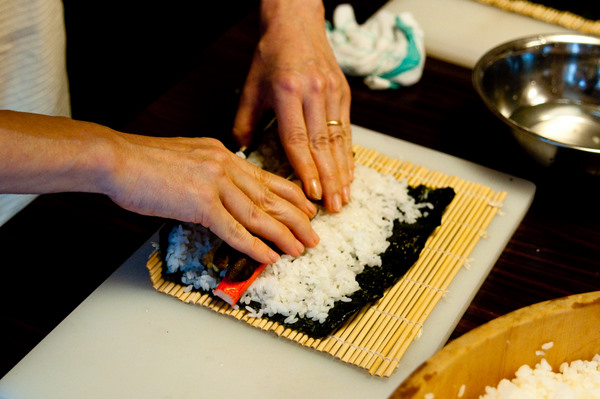
The strip of nori that was clear of rice was slightly wetted. Then, holding the fillings down, the sushi was slowly rolled up.

Kyoto cooking class


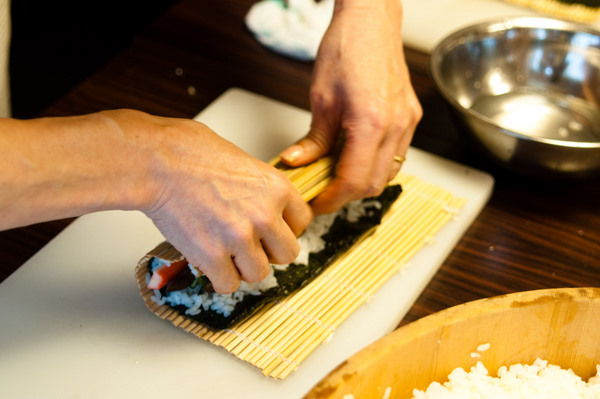
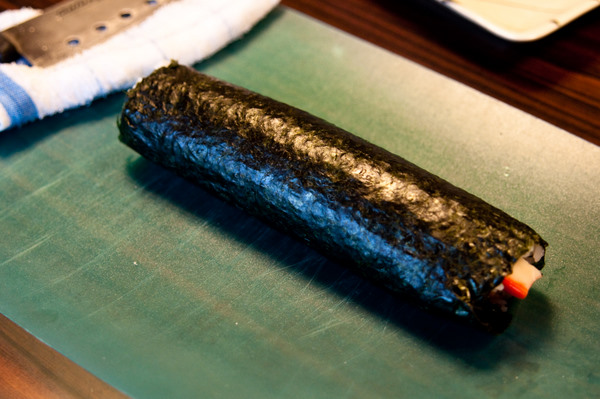
It was all rolled up tightly, with the bamboo mat being used to press it all together and shape it into a cylinder.

Kyoto cooking class


We got to roll our own sushi. This was Alastair's one.

Kyoto cooking class


And Alastair's one all cut up. Pretty good for someone who not only has never rolled sushi before but also doesn't cook!

Kyoto cooking class


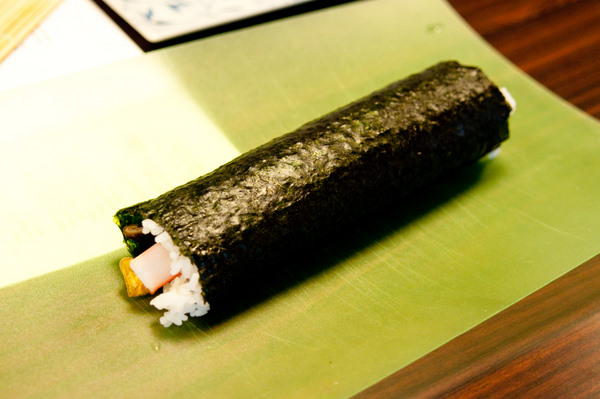
And here's mine!

Kyoto cooking class


And here's my sushi roll cut into pieces. I had never made rolled sushi before - I was pretty pleased with it. It was easier than I thought it would be.

Kyoto cooking class


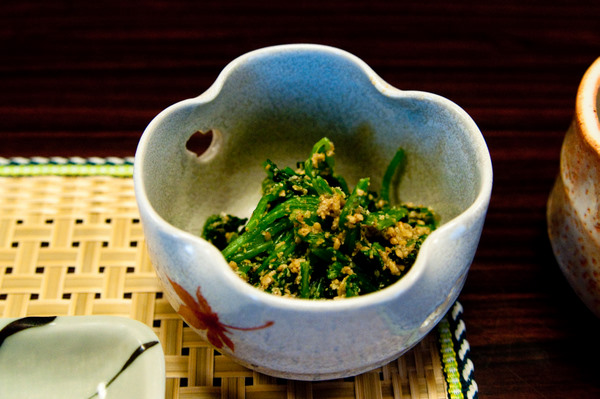
Along with the miso soup and sushi rolls for lunch, we also had a small salad of spinach with roasted sesame dressing. Oh, and tea and pickles (of course). The spinach was very simple but delicious. The spinach was boiled and cut into small sections, and the dressing was made with ground roasted sesame seeds, dashi, soy sauce and a bit of sugar.

We had a great time at the class, although next time I would like to make something more advanced. Even Alastair enjoyed it - perhaps I could get him to like this "cooking thing" after all!

Fushimi Inari Taisha


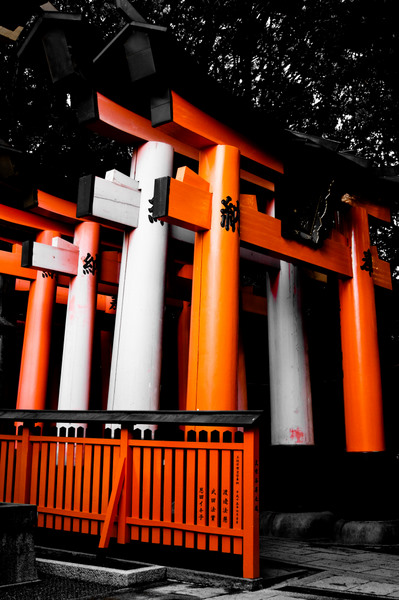
After the cooking class, Alastair and I headed off to see the Fushimi Inari shrine, which is a Shinto shrine that is dedicated to Inari, the god of rice, sake, prosperity and in modern times, business. It's one of Kyoto's oldest shrines and is noted for the thousands of small torii gates that line the long path up the hill behind the shrine.

Fushimi Inari Taisha


The torii are donated by businesses, and it's a very striking place to visit. It takes about two hours to walk the whole trail, so we didn't make it to the end. At first we didn't realise how far it stretched, and Alastair started counting all the gates. With 10,000 of them, it would have taken a while!

That's just about it for the Japan posts - I may have a couple of random bits and pieces that I'll post, as well as one or two about Hong Kong, China and Macau. Thanks for sticking with them. I have loved writing them and remembering all the great food we ate!

(And if you would like a recap, all the Japan posts can be found here.)


Tuesday, January 19, 2010

Japan: Kyoto – Yakitori typhoon special

On Wednesday, 6 October 2009, Typhoon Melor, the first typhoon to reach landfall in Japan in two years, arrived on Japan’s south coast. The next day, it hit central Japan, bringing heavy rain and winds, disrupting flights and train services and sadly causing a couple of deaths.

We were in Kyoto at the time of the typhoon, and while the rain was heavy, it didn’t really affect the Kyoto area. Thank goodness! But for dinner on Wednesday night, we went to a yakitori restaurant, where there was a typhoon special – the price of all dishes were 50% off!

From what I can ascertain, yakitori literally means grilled chicken, and is usually used to refer to skewered chicken pieces. On the menu at the restaurant was chicken, chicken and more chicken.

Alastair and I ordered a few dishes to share (actually, the ordering went along the lines of me saying, “How about we order this, this, this and this?” And he said, “Okay.”)

Yakitori restaurant


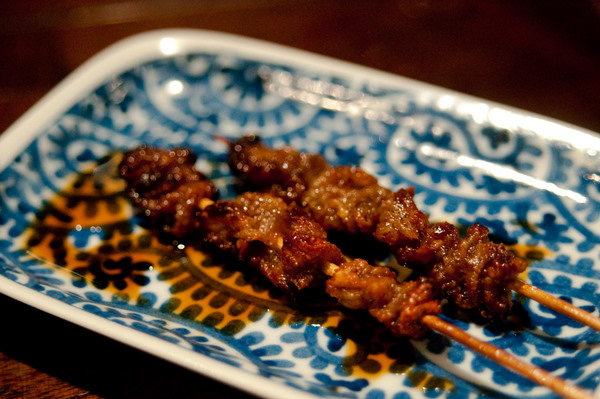
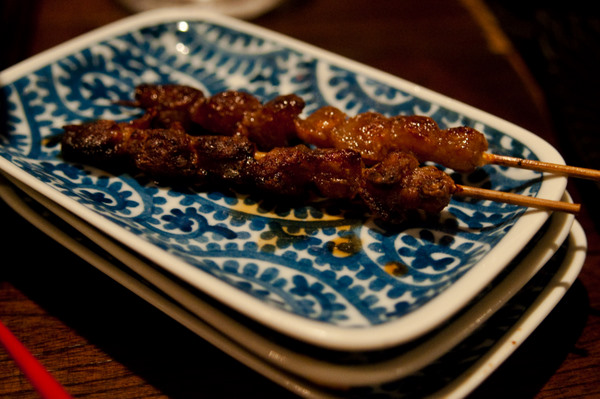
I ordered us chicken skin skewers – there was an option for plain (with sauce) and garlic. We ordered two of each. These are the plain chicken skin skewers - they were fantastic. Fatty, delicious, a bit chewy in parts. Oh yeah.

Yakitori restaurant


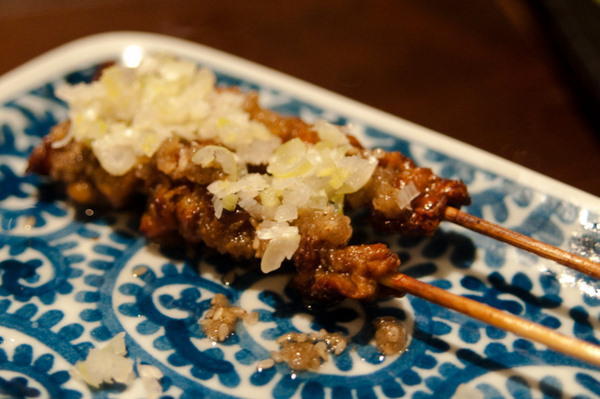
The garlic skewers were also good, although I did shake off most of the garlic. I love cooked garlic, but not such a fan of raw garlic. I hate how raw garlic refuses to leave the party.

Yakitori restaurant


We also ordered some chicken meat skewers with sauce. They were good, but the chicken skin ones were the way to go.

Yakitori restaurant


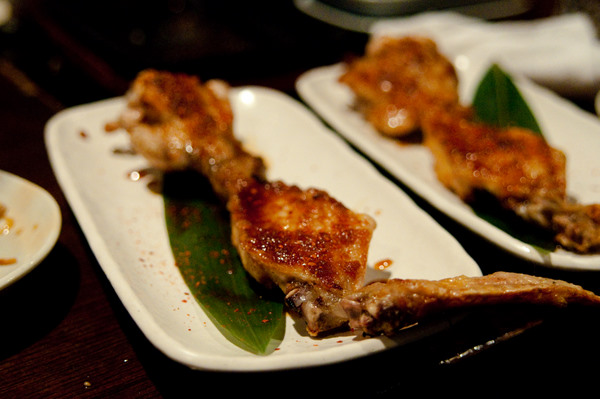
Next were some rather large chicken wings. The wings could be done plain or hot, to which we had no hesitation – hot please! They were only mildly hot, but had a good crispy skin and tender meat that came easily off the bone.

Yakitori restaurant


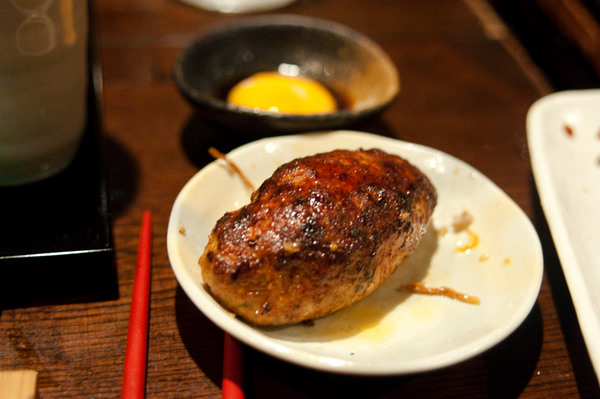
We also ordered two minced chicken patties. The patties were served with a raw egg for dipping. The patties were juicy and somehow worked with the raw egg.

Yakitori restaurant


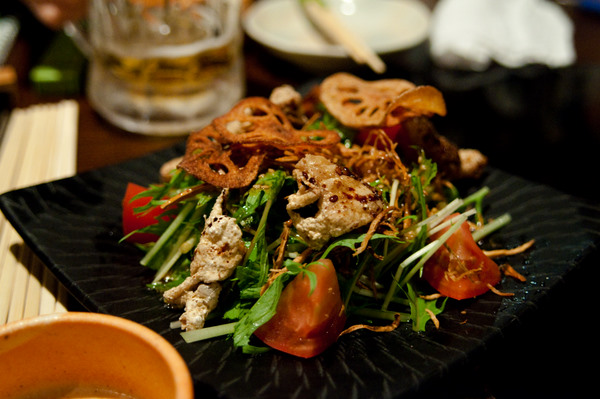
I always try to ensure we eat some vegetables, even if it's a token effort, so I ordered us a salad. It was quite a good salad, topped with fried lotus root slices, and I think that white item was deep fried chicken skin. Which pretty much negated the health factor. Buh bow. It was a losing battle anyway, with all that chicken!

Oh, and we noticed an interesting item on the menu at the restaurant - chicken sashimi. We didn’t order it. I’m a fairly adventurous eater, but can’t stomach the thought of eating raw chicken. Seriously, it makes me feel ill just thinking about it. Obviously that "raw chicken = salmonella" message has been drummed into me! Are Japanese chickens not at risk of salmonella?

Have you tried chicken sashimi? Would you?


Wednesday, January 13, 2010

Japan: Kyoto - Tea ceremony

As mentioned in the ramen post, Kyoto was our last stop in Japan. Kyoto is one of Japan’s best preserved cities, and was the capital and the emperor’s residence from 794–1868. The city is full of temples, shrines and has an amazing cultural heritage.

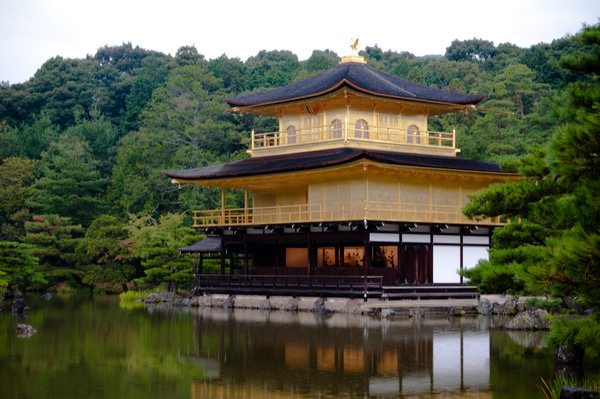
Golden Pavilion


While in Kyoto, one of the places we saw was Kinkaku-ji – the Temple of the Golden Pavilion. The Golden Pavilion is a Zen Buddhist temple, and the original Kinkaku-ji was built in 1397 as a retirement villa for Shogun Ashikaga Yoshimitsu. He intended to cover the exterior of the building with gold, but only managed to coat the ceiling of the third floor with gold leaf before he died.

After Ashikaga‘s death, his son converted the building into a Zen temple. Over the years, the temple was burnt down and restored several times (the story of temples and shrines in Japan, huh!).

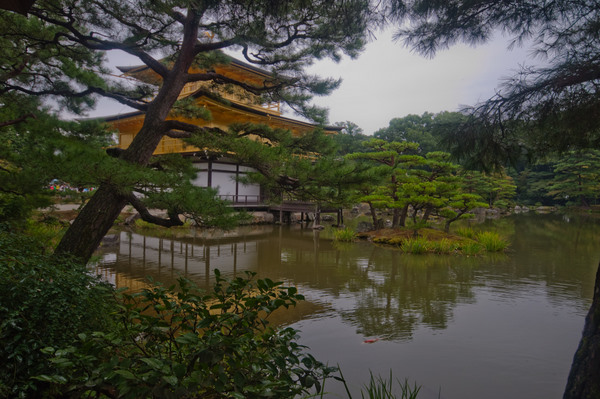
Golden Pavilion


The present structure dates from 1955, and was rebuilt true to the original except that both the upper stories were covered in gold leaf, in accordance with Ashikaga’s original intentions. In 1987, a new lacquer coating and gilding with golf leaf was added that was five times thicker than the original coating. It’s a beautiful complex, with the Golden Pavilion situated in its garden at the edge of a lake, and is VERY popular for school excursions. In fact, the day we visited, there were hundreds of school kids there in their uniforms. As mentioned in previous Japan posts, we were “shrined/templed out” well before we reached Kyoto, but the Golden Pavilion was a worth while visit. It was really beautiful, despite the hordes of school children (okay, they were kind of cute).

Tea ceremony demonstration
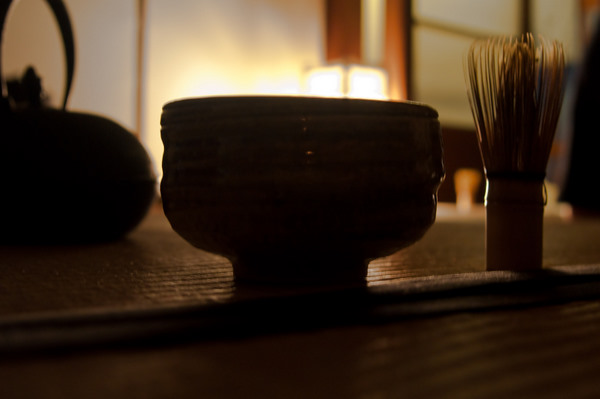
Tea bowl and bamboo whisk


While in Kyoto, we also attended a tea ceremony demonstration.

The Japanese tea ceremony is a traditional ritual that involves the preparation and presentation of matcha, powdered green tea. The development of the ritual was influenced by Zen Buddhism, and the tea is prepared by a skilled practitioner and served to a small group of guests. The setting is very important, as is the preparation of the tea, and the study of tea ceremony takes many, many years.

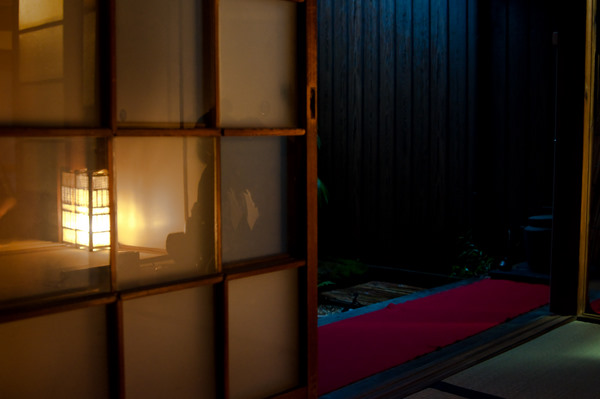
Tea ceremony demonstration


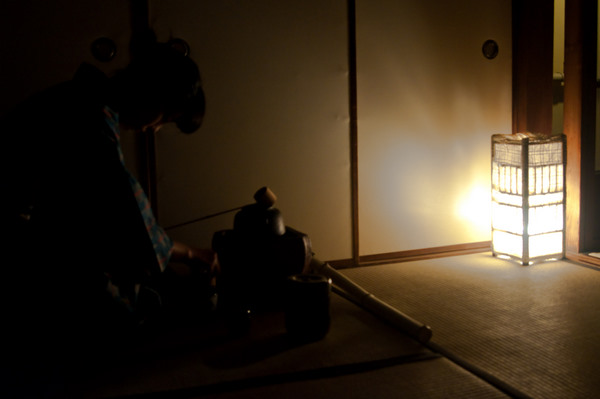
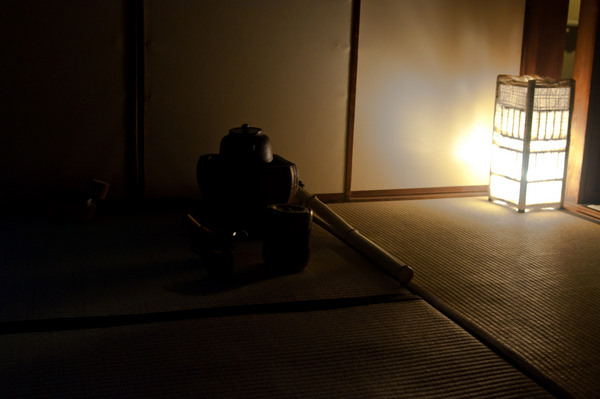
We entered the small, tatami lined room, and took a seat by the wall. To one side was an open door, that lead out to a small Japanese style garden. It was raining that evening, so we could hear the pitter patter of the falling rain as our kimono-clad host outlined the ritual behind the tea ceremony. She explained to us the importance of the setting, drawing our attention to the calligraphy in the scroll alcove, and the simple flower arrangement nearby. She told us that the scroll and the flower arrangement are always carefully chosen to set the mood and the atmosphere of the tea ceremony.

The tea ceremony consists of many steps, and the guiding philosophy rests on four important principles: harmony, respect, purity and tranquillity. Our host described how tea ceremonies are normally run – there can be shorter ceremonies that consist of sweets, tea and sometimes a light meal, while there are more formal gatherings that include a full-course kaiseki meal that can last up to four hours.

Tea ceremony demonstration


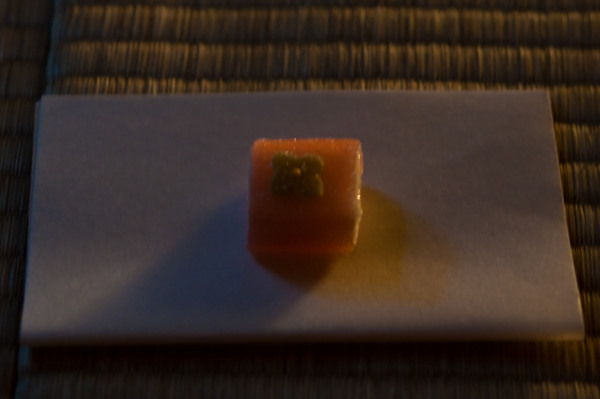
We were all given a sweet to eat. The sweet is eaten before drinking the tea, as it helps to counteract the bitterness of the tea. Our host explained the importance of the equipment used in the ceremony. A wide range of equipment is available, and different styles are used for different events and in different seasons. The essential equipment included tea bowls, a tea caddy which holds the powdered tea, a tea scoop which is generally carved from a single piece of bamboo, a tea whisk, also carved from a single piece of bamboo, and a cloth used for wiping the tea bowls. All different sizes and styles of tea bowls are available, and some bowls are extremely valuable. Slight idiosyncrasies and flaws in the bowls are considered to make bowls more interesting than another and are prized.

Tea ceremony demonstration


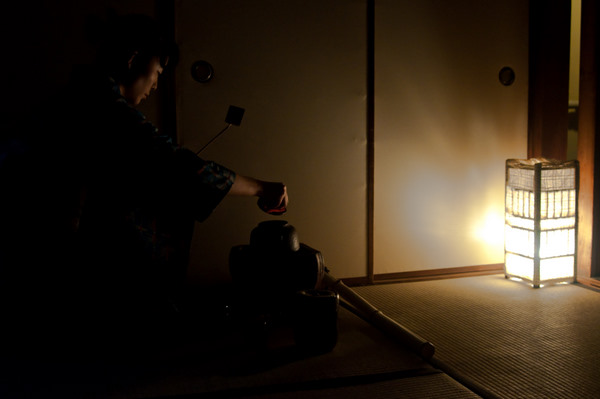
Our host started the tea ceremony demonstration, her movements slow and considered. Everything was done with great care, whether it was wiping all the utensils, folding her cloth, scooping tea into a tea bowl, adding water, and whisking the tea until it was thick and frothy. It’s hard to describe exactly what it was like – her movements were almost like a dance, they were so exact and smooth. The room was dim and silent apart from the sound of falling rain. It was incredibly atmospheric!

Tea ceremony demonstration


We had an opportunity to try whisking the tea before tasting it. Whisking it to a smooth froth was harder than it looked and my tea ended up still a bit clumpy. The tea was quite bitter and also quite thick, similar to the thickness of a milkshake. Definitely not something that you would drink every day.

Tea ceremony demonstration


I loved the demonstration. It was fascinating to watch our host prepare the tea, and learn about all the thought and ritual behind it. After the demonstration, Alastair and I wandered back out into the rain, feeling a bit more tranquil. It was well worth the experience.


Related Posts with Thumbnails